


EECP Therapy in Toledo, Ohio: Who Is a Candidate and What Results to Expect
For patients living with persistent chest pain who have exhausted standard treatment options, EECP therapy in Toledo, Ohio offers a clinically supported, non-invasive path forward. Toledo Cardiology is one of the very few practices in Northwest Ohio that provides Enhanced External Counterpulsation, giving local patients access to a treatment that is difficult to find outside of major academic medical centers.
WHAT IS EECP?
EECP stands for Enhanced External Counterpulsation. It is a non-invasive procedure, meaning no surgery, no catheters, and no sedation. The goal is to reduce the symptoms of angina (chest pain or pressure caused by reduced blood flow to the heart) by increasing coronary blood flow to areas of the heart that are not receiving enough oxygen.
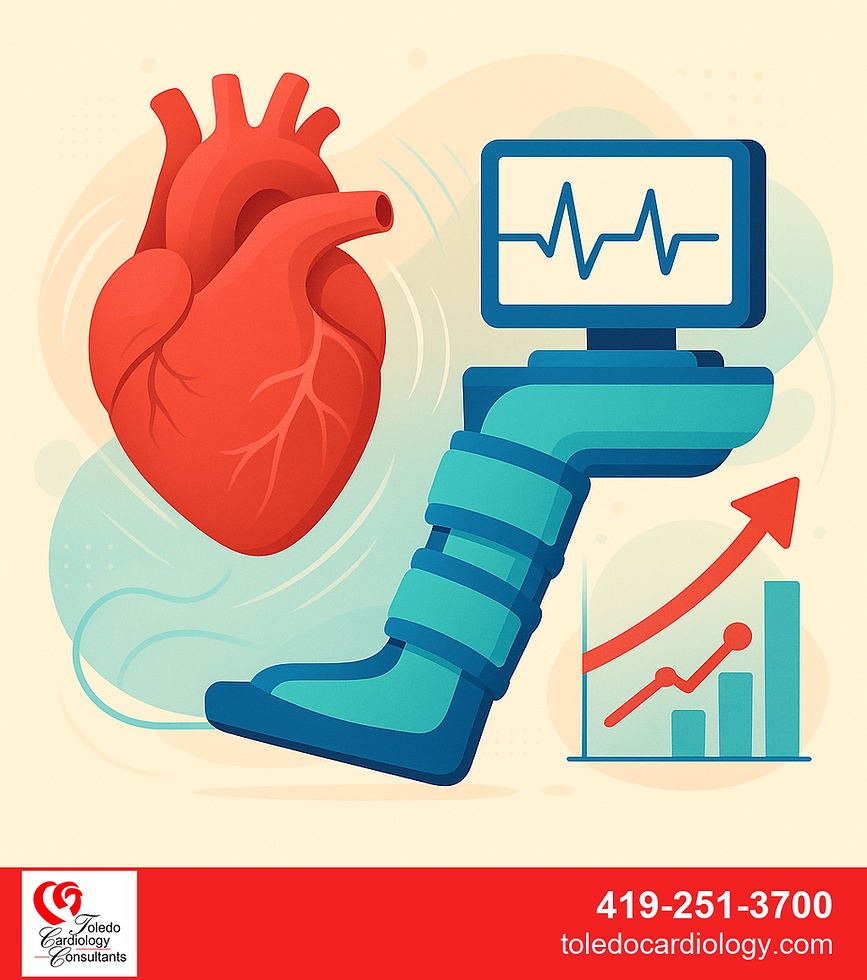
During each session, compression cuffs are wrapped around the calves, lower thighs, and upper thighs. A computer reads the patient's ECG signals in real time and uses those signals to control precisely when the cuffs inflate and deflate.
During diastole (the rest period of the heart), the cuffs inflate in sequence from the calves upward. This raises blood pressure in the arteries and drives more blood into the coronary arteries, which are the vessels that feed the heart muscle itself.
At the start of systole (the work period of the heart, when it contracts to push blood out), all cuffs release simultaneously. This sudden decompression makes it easier for the heart to pump, reducing the workload on an already stressed muscle.
Compression of the leg veins also boosts overall blood return to the heart, improving cardiac output (the total volume of blood the heart pumps per minute).

HOW TREATMENT WORKS
A full course of EECP consists of 35 hours of treatment, delivered one hour per day. The level of external compression is increased gradually over the course of treatment as each patient's tolerance builds. Patients lie comfortably on a padded table for each session and are monitored throughout.
Over the course of therapy, the treatment is thought to encourage the development of coronary collateral flow (natural bypasses, meaning small blood vessels that grow around blocked or narrowed arteries and redirect blood to oxygen-deprived areas of the heart). This is one of the mechanisms researchers believe accounts for the lasting benefits patients experience well after the treatment course ends.
WHO IS A CANDIDATE?
EECP is most appropriate for patients who have angina that has not responded adequately to medications and who are not good candidates for procedures such as angioplasty (a catheter-based procedure to open blocked arteries) or bypass surgery. Common reasons a patient may not be a surgical candidate include advanced age, other health conditions, prior failed revascularization procedures, or diffuse coronary artery disease (blockages spread across many small vessels rather than concentrated in one or two large ones).
Patients in the Toledo area and across Northwest Ohio who fit this profile often feel that further options have closed. EECP is specifically designed for this population. A cardiologist at Toledo Cardiology will review your full cardiac history, current medications, and any recent imaging or stress test results to determine whether EECP is appropriate for you.
EECP is generally not used in patients with certain heart rhythm problems, severe aortic valve disease, active blood clots in the legs, or uncontrolled high blood pressure. A complete evaluation identifies whether any of these factors apply.
WHAT RESULTS CAN PATIENTS EXPECT?
Studies have shown that EECP improves angina symptoms and improves blood flow to oxygen-deprived regions of the myocardium (the heart muscle) for up to three years following the initial treatment course, as measured by nuclear stress testing (an imaging test that evaluates blood flow through the heart using a small amount of radioactive tracer).
Patients who complete a full course of EECP have reported:
Reduced frequency and intensity of chest pain episodes
Decreased need for angina medications such as nitroglycerin
Improved exercise tolerance, meaning the ability to walk, climb stairs, or perform daily tasks with less discomfort
Sustained improvement in heart perfusion (blood delivery to the heart muscle)
An improved overall sense of well-being and quality of life
The benefits of EECP do not end when the sessions end. Evidence supports that clinical and symptomatic improvements persist well beyond the completion of therapy. For patients in the Maumee, Perrysburg, Sylvania, and greater Toledo area who have been told there is little left to offer beyond medication management, that finding is significant.
Related Reading from Toledo Cardiology
TAKING THE NEXT STEP
If you or someone you care for has been living with chronic angina and standard treatments have not provided adequate relief, a consultation at Toledo Cardiology is a reasonable and practical next step. Our team will review your history, answer your questions about EECP, and help you understand whether this therapy fits your situation. Toledo Cardiology is located in Toledo, Ohio and serves patients throughout Northwest Ohio and the surrounding region.
This content is for educational purposes only and is not a substitute for personalized medical advice. Please consult your physician about your individual health needs.


