


Leg Swelling and Heart Failure in Toledo, Ohio: What Your Ankles Might Be Telling You
Leg swelling is one of the most common reasons patients in Toledo and across Northwest Ohio seek a cardiology evaluation, yet it is also one of the most misunderstood. Many people assume puffy ankles are simply the result of a long day on their feet or too much salt at dinner. Sometimes that is true. Other times, swelling is the body's earliest and most visible signal that the heart is not circulating blood and fluid efficiently. At Toledo Cardiology Consultants, we evaluate edema (swelling caused by excess fluid trapped in body tissues) carefully, because the difference between a benign cause and a cardiac one matters enormously for long-term health.
WHY THE HEART IS OFTEN AT THE CENTER OF THIS CONVERSATION
The heart functions as the body's central pump, moving blood through a closed circulatory system (the network of arteries and veins that delivers oxygen and nutrients to every organ). When the heart is pumping effectively, fluid stays where it belongs. When cardiac output (the volume of blood the heart pushes forward with each beat) drops, pressure builds backward through the venous system (the vessels that return blood to the heart). That elevated back-pressure forces fluid out of the blood vessels and into surrounding tissues, most noticeably in the legs, ankles, and feet, simply because gravity draws it downward.
This mechanism is a hallmark of heart failure (a condition in which the heart cannot pump or fill with blood adequately to meet the body's needs). Heart failure is not a sudden stopping of the heart; it is a gradual, manageable process, and recognizing its early signs dramatically changes what we can do for patients. If you have noticed swelling developing slowly over weeks and you also experience fatigue, shortness of breath, or difficulty keeping up with activities you used to manage easily, those symptoms together deserve prompt evaluation by a heart failure specialist in Toledo, Ohio.
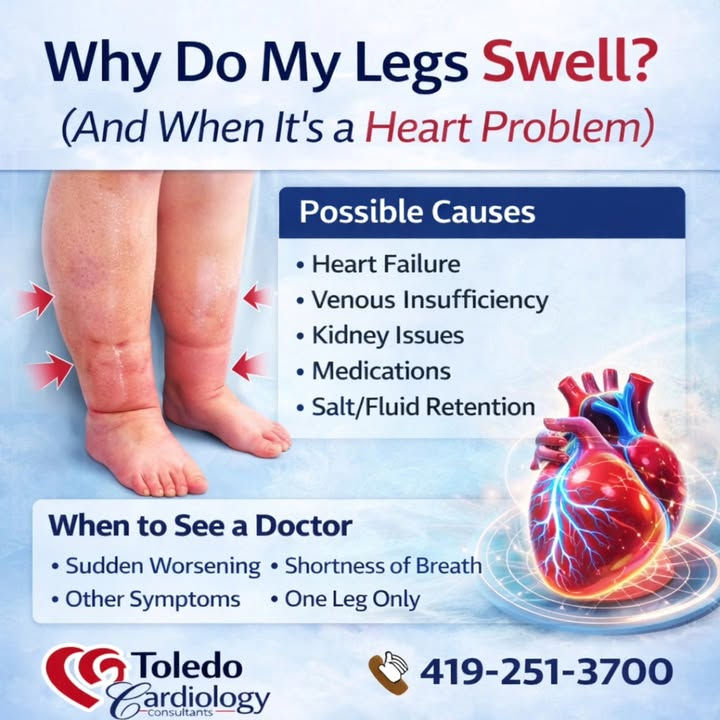
SIGNS AND SYMPTOMS: WHEN SWELLING WARRANTS A CALL TO YOUR CARDIOLOGIST
Not every instance of leg swelling points to the heart, and part of our work at Toledo Cardiology is sorting through the full picture. Other common causes include:
Venous insufficiency (a condition in which the veins cannot push blood back toward the heart efficiently, allowing it to pool in the lower legs)
Kidney dysfunction (reduced kidney function that limits the body's ability to excrete excess fluid)
Certain medications, including some blood pressure drugs and anti-inflammatory agents
Excess sodium or fluid intake that overwhelms the body's normal regulatory balance
The following patterns suggest a more urgent evaluation is needed. Contact a physician promptly if you notice:
Sudden or rapidly worsening swelling in both legs
Swelling in one leg only, which can indicate deep vein thrombosis (a blood clot forming in a deep leg vein)
Shortness of breath at rest or when lying flat
Unexplained weight gain of two or more pounds in a single day or five or more pounds in a week
Fatigue or a noticeable drop in your ability to be active
These symptoms in combination, rather than any one in isolation, are what guide our clinical decision-making. We also want to note that women frequently experience atypical presentations of cardiac conditions, including fatigue and swelling without classic chest pain. Our post on heart attack warning signs in Toledo, Ohio covers those differences in detail and is worth reading alongside this one.
DIAGNOSIS: HOW WE EVALUATE EDEMA AT TOLEDO CARDIOLOGY
A thorough evaluation for cardiac edema typically begins with a detailed history and physical examination. From there, we may use echocardiography (ultrasound imaging of the heart's structure and pumping function), blood tests including BNP (brain natriuretic peptide, a biomarker that rises when the heart is under stress), and an electrocardiogram or ECG (a recording of the heart's electrical activity) to build a complete picture. These tools allow us to distinguish between structural heart problems, valve disease, and non-cardiac causes without unnecessary testing.
Patients across Toledo, Maumee, Perrysburg, Sylvania, Bowling Green, Findlay, and the Southeast Michigan border area have access to that full diagnostic range here, without the inconvenience of traveling to a large academic center. We combine the resources of a major cardiology practice with the continuity of care that comes from being a locally rooted, community-based team.
MANAGEMENT: TREATMENT DEPENDS ON THE UNDERLYING CAUSE
When swelling is cardiac in origin, management centers on improving the heart's ability to pump and reducing the fluid load on the body. This often involves diuretics (medications that help the kidneys remove excess fluid), medications that support cardiac function, and careful monitoring of daily weight as an early warning system for fluid accumulation. Dietary sodium restriction remains a foundational recommendation for most patients with heart failure.
For patients whose swelling is linked to other cardiovascular risk factors such as elevated cholesterol or uncontrolled blood pressure, addressing those underlying conditions is equally important. Our team integrates those conversations into every visit. You can also read more about how we approach risk reduction in our post on cholesterol management in Toledo, Ohio.
Related Reading from Toledo Cardiology
Schedule Your Appointment in Toledo
Swelling in your legs or ankles may seem like a minor inconvenience, but it can be one of the earliest and most treatable warning signs your cardiovascular system produces. The cardiologists at Toledo Cardiology Consultants are here to evaluate your symptoms carefully, explain what is happening in plain language, and build a management plan that fits your life in Northwest Ohio. Our office is accepting new patients. When you call, our staff can walk you through what to bring to your first visit and answer any questions about parking and paperwork before you arrive.


