


AFib Awareness in Toledo, Ohio: What Alcohol Does to Your Heart This St. Patrick's Day
Every March, Toledo and Northwest Ohio celebrate St. Patrick's Day with parades, gatherings, and plenty of green. It is a welcome tradition, and at Toledo Cardiology Consultants we have no interest in taking the joy out of it. What we do want every patient and neighbor in our community to understand is this: alcohol affects the heart in ways that are measurable, clinically significant, and, for some people, immediately dangerous. If you have ever been told you have atrial fibrillation (AFib, an irregular and often rapid heart rhythm caused by disorganized electrical signals in the upper chambers of the heart), high blood pressure, or any form of heart disease, St. Patrick's Day deserves a second look before the first drink.
HOW ALCOHOL AFFECTS THE HEART
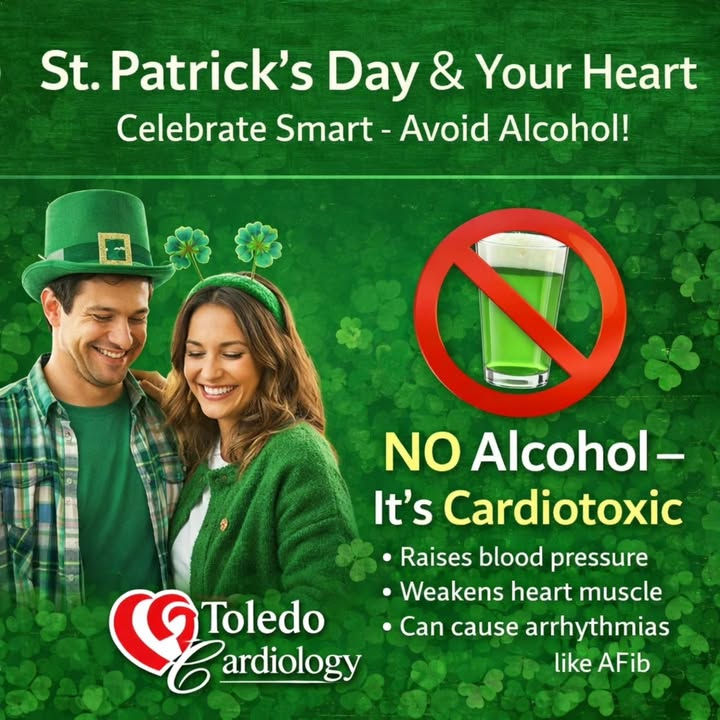
Alcohol is processed by the liver, but its effects reach the cardiovascular system quickly. Ethanol (the active compound in alcoholic beverages) acts on ion channels in cardiac muscle cells, disrupting the orderly electrical signals that keep the heart beating in a regular rhythm. This disruption can trigger arrhythmias (abnormal heart rhythms), including AFib, even in people with no prior cardiac history.
Beyond rhythm, alcohol raises blood pressure by activating the sympathetic nervous system (the branch of the nervous system responsible for the body's stress response). Over time, elevated blood pressure damages the arterial walls and forces the heart to work harder during systole (the work phase of the heart, when it contracts and pushes blood forward). Chronic heavy drinking can also lead to alcoholic cardiomyopathy (a condition in which the heart muscle weakens and enlarges, reducing its ability to pump blood effectively).
Weight gain and metabolic disruption are additional downstream effects. Alcohol is calorie-dense and contributes to insulin resistance (a reduced ability of cells to respond to insulin), which compounds cardiovascular risk over time.
WHAT IS HOLIDAY HEART SYNDROME
Even people who drink only occasionally are not fully protected. A well-documented clinical phenomenon called Holiday Heart Syndrome describes episodes of AFib or other arrhythmias that occur after a single session of heavy drinking, most commonly around holidays. The person may have no history of heart disease and may feel entirely well before the episode. Symptoms can include a racing or fluttering heartbeat, lightheadedness, shortness of breath, or chest discomfort. The episode typically resolves with abstinence, but it signals that the heart is electrically vulnerable, and it warrants evaluation.
If you experience palpitations after drinking, our post on heart palpitations in Toledo, Ohio explains when those sensations cross the threshold into something a cardiologist needs to assess.
WHO IS AT HIGHEST RISK
Anyone with a prior diagnosis of AFib, hypertension (high blood pressure), heart failure (a condition in which the heart cannot pump enough blood to meet the body's needs), or coronary artery disease (narrowing of the arteries that supply the heart muscle with oxygen-rich blood) should treat alcohol as a modifiable risk factor, not simply a lifestyle choice. For these patients, the safest option is avoidance.
Women metabolize alcohol differently than men and may experience cardiac effects at lower consumption levels. For a fuller picture of how cardiovascular risk presents differently in women, see our dedicated resource on women and heart disease in Toledo, Ohio.
CELEBRATING SMART: PRACTICAL GUIDANCE
You do not need alcohol to enjoy St. Patrick's Day in Toledo. Consider these alternatives that support rather than stress your heart:
Choose sparkling water, non-alcoholic beer, or mocktails at gatherings.
Take a walk with family or friends; even moderate physical activity supports healthy heart rate and blood pressure. Our post on walking for heart health in Toledo, Ohio explains the evidence behind daily step goals.
Focus on a balanced meal; heavy, salty, or processed foods on top of alcohol compound cardiovascular strain.
If you do choose to drink, limit yourself to one standard drink and monitor for any unusual heart sensations afterward.
WHEN TO CALL YOUR CARDIOLOGIST
Contact Toledo Cardiology Consultants promptly if you notice a racing, pounding, or irregular heartbeat after drinking; sudden shortness of breath; chest pressure; or lightheadedness that does not resolve quickly. These symptoms may indicate an arrhythmia that needs evaluation and, in some cases, treatment. Do not wait until after the holiday weekend.
Related Reading from Toledo Cardiology
Schedule Your Appointment in Toledo
Toledo Cardiology Consultants serves patients across Toledo, Maumee, Perrysburg, Sylvania, Bowling Green, Findlay, and the southeast Michigan border region. If you have concerns about AFib, heart rhythm, or your cardiovascular risk related to alcohol use, our team is ready to help. New patients can call our office directly to schedule an evaluation. Parking is available on site, and new patient paperwork can be completed in advance.


